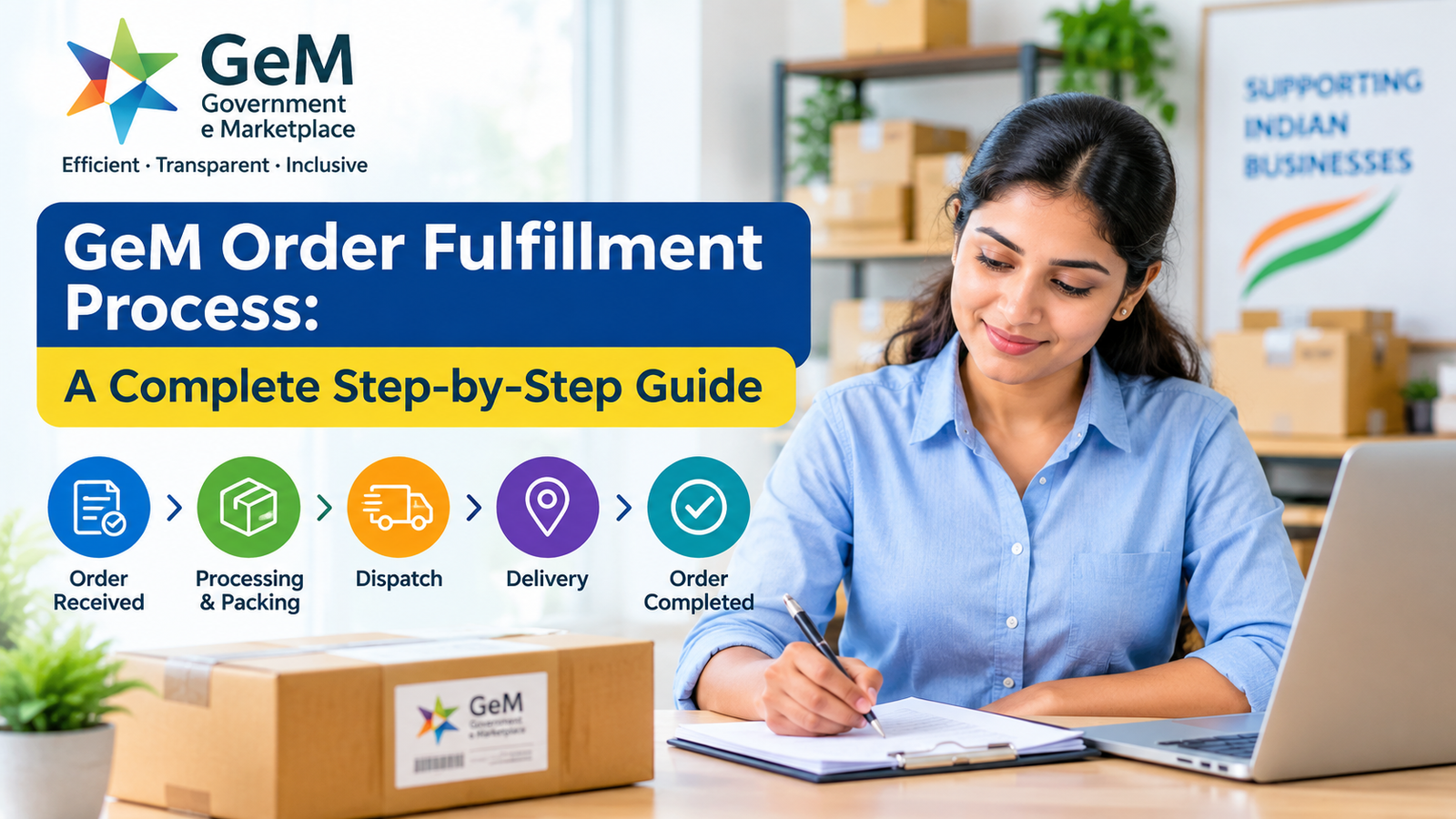
GeM Order Fulfillment Process | A Complete Step-by-Step Guide (2026)
The Government e-Marketplace (GeM) has transformed how Indian government departments, PSUs, and autonomous bodies procure goods and services. But winning a bid is only half the journey — what happens after an order lands is where sellers either build a strong reputation or run into penalties, payment delays, and rating drops.
This is where understanding the GeM order fulfillment process becomes critical for every registered seller
In this guide, we break down each stage of the GeM order fulfillment process, the documents involved, common pitfalls, and how to stay compliant while ensuring timely payments.
What Is the GeM Order Fulfillment Process?
The GeM order fulfillment process refers to the complete lifecycle of a purchase order on the Government e-Marketplace — starting from the moment a buyer places an order to the point where the seller receives payment.
It includes order acceptance, dispatch, delivery, inspection, acceptance certification, invoicing, and final payment release.
Because GeM is a government-run platform, every stage of the GeM order fulfillment process is tracked digitally, with defined timelines and automated escalation mechanisms.
Sellers who understand this workflow are far better positioned to avoid disputes and maintain a high seller rating.
Why the GeM Order Fulfillment Process Matters
Unlike typical B2B or B2C transactions, government procurement through GeM ties payment directly to formal acceptance rather than mere delivery. This means a seller cannot assume that dropping off goods at a government office completes the transaction.
If any step in the GeM order fulfillment process is missed or delayed, it can hold up payment for weeks — even if the product itself was delivered on time and in good condition.
For businesses relying on GeM as a steady revenue channel, mastering this process is not optional. It directly affects cash flow, seller ratings, and eligibility for future tenders.
Step-by-Step Breakdown of the GeM Order Fulfillment Process
1. Order Acceptance
Once a buyer places a Purchase Order (PO) on GeM, the seller must formally accept it within the stipulated window, typically 48 to 72 hours.
Failing to accept the order in time can trigger an automatic "Incident" on the buyer's end, which negatively impacts the seller's performance score.
Prompt acceptance is the first and most important checkpoint in the GeM order fulfillment process.
2. Dispatch and Delivery
After acceptance, the seller is responsible for dispatching the goods or beginning service delivery within the timeline mentioned in the PO. Sellers should:
- Keep adequate stock or service capacity ready before bidding
- Update shipment status regularly on the GeM Order Management Dashboard
- Communicate any anticipated delays proactively through the portal messaging system, rather than staying silent
Timely and well-documented dispatch keeps the GeM order fulfillment process moving smoothly and avoids unnecessary disputes later.
3. Provisional Receipt Certificate (PRC)
Upon physical delivery, the buyer or consignee may issue a Provisional Receipt Certificate confirming that the consignment has arrived. This is an interim acknowledgment, not final acceptance, but it is an important checkpoint that protects both parties by creating a documented delivery record.
4. Inspection and Quality Check
Depending on the category of goods or services, the consignee may carry out inspection, installation, testing, or verification before accepting the order.
Any discrepancy between the delivered item and the accepted specification should be documented immediately, since disputes at this stage directly affect the next step of the GeM order fulfillment process.
5. CRAC Generation (Consignee Receipt and Acceptance Certificate)
This is arguably the most important milestone in the entire GeM order fulfillment process. Once the buyer confirms that the goods or services meet the required specification and are in acceptable condition, they generate a CRAC through their GeM login.
As per GeM guidelines, this certificate is generally expected to be issued within about 10 calendar days of delivery.
The CRAC record specifies accepted and rejected quantities, along with any deductions. If part of an order is rejected, the seller should obtain the documented reason, compare it against the original specification, and pursue replacement or dispute resolution within the contract's timeline.
6. Invoice Submission
Once CRAC is generated, the seller raises an invoice against the purchase order through the GeM portal. It's important to reconcile the invoice carefully — legal entity name, GSTIN, HSN/SAC codes, quantities, tax rates, and consignee details must all match the order and the acceptance certificate.
Mismatches at this stage are one of the most common causes of payment delay in the GeM order fulfillment process.
7. Bill Processing and Payment Release
After invoice submission, the bill moves to the department's Accounts or Finance section, which processes payment through the government's integrated financial system (commonly PFMS), typically via NEFT or RTGS.
Payment timelines are usually counted from the date of acceptance (CRAC generation) rather than the date of physical delivery — a distinction many sellers overlook.
8. Order Completion and Feedback
Once payment is credited, the purchase order is marked "Complete" on the GeM system. The buyer may also leave feedback or a rating based on the seller's performance throughout the fulfillment cycle.
This rating feeds into the seller's overall GeM profile and can influence future bid competitiveness.
Common Challenges Sellers Face in the GeM Order Fulfillment Process
- Delayed order acceptance, leading to automatic incidents and lowered performance scores
- Incomplete or mismatched invoices, which stall the payment cycle even after CRAC is generated
- Outdated bank or PFMS details, causing payment credit failures
- Poor communication, where delivery delays aren't flagged proactively through the portal
- Ignoring CRAC status tracking, resulting in missed follow-ups when buyers delay certification
Best Practices to Streamline the GeM Order Fulfillment Process
- Maintain stock readiness so you can dispatch immediately after order acceptance.
- Track your Order Management Dashboard regularly to monitor status changes from acceptance to payment.
- Double-check invoices against the PO and CRAC before submission.
- Keep bank and GST details updated on your seller profile to avoid payment hold-ups.
- Use portal communication channels for all official correspondence — this creates a documented trail that helps in dispute resolution.
- Follow up on CRAC generation if the buyer doesn't issue it within the expected window.
Getting Professional Support for GeM Order Management
Navigating the GeM order fulfillment process can be time-consuming, especially for small businesses juggling multiple government orders at once.
If you'd like expert assistance with GeM registration, catalogue management, order fulfillment, or resolving payment delays, the team at GeM Online Portal offers end-to-end support to help sellers stay compliant and get paid on time.
Conclusion
The GeM order fulfillment process is a structured, milestone-driven workflow designed to bring transparency to government procurement. From order acceptance and dispatch to CRAC generation and final payment, every step matters — and skipping documentation or communication at any point can delay your payment or hurt your seller rating.
By understanding this process thoroughly and following the best practices outlined above, sellers can build a reliable track record on GeM and unlock more government business opportunities over time.
If you're new to the platform or need help managing your orders efficiently, consider partnering with experienced GeM consultants like gemonlineportal.grih.in to simplify your fulfillment journey.